Digital Wall Scanner vs Electronic Stud Sensor Guide
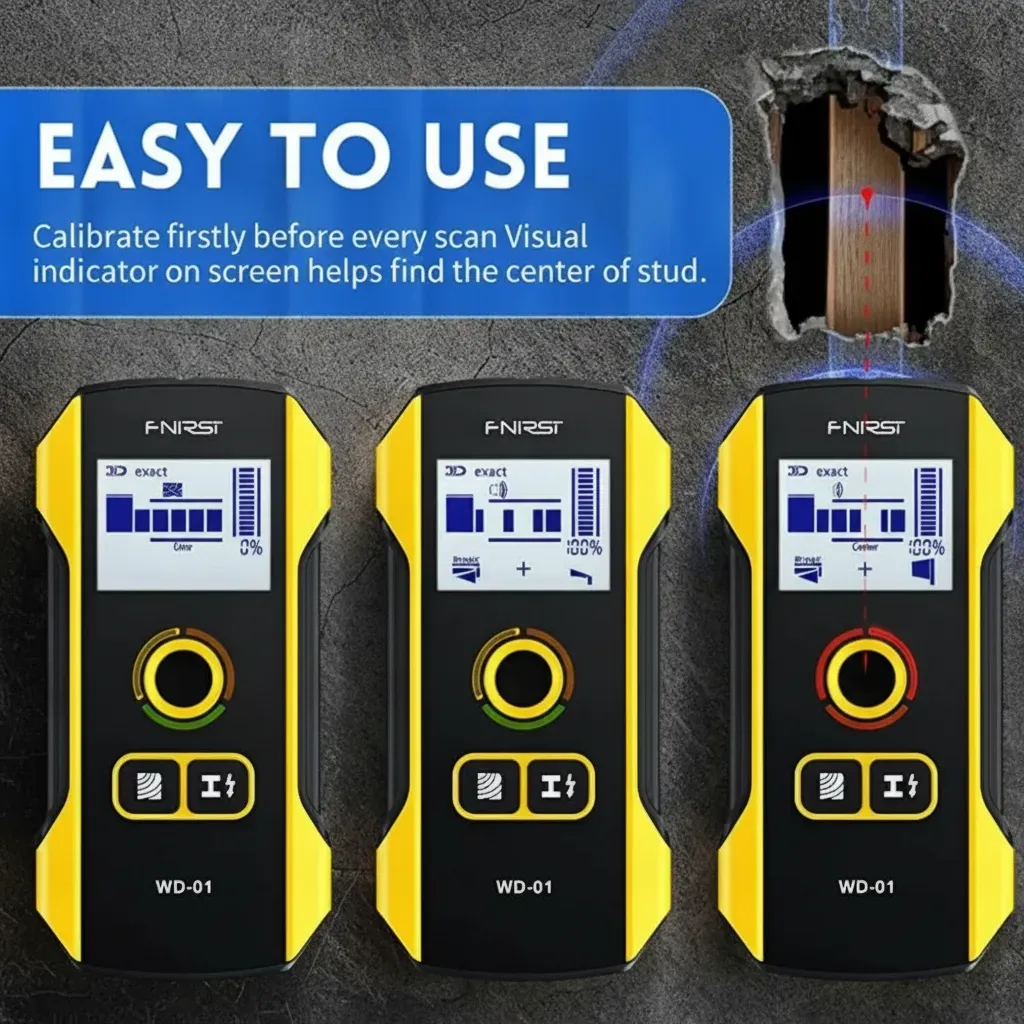
A digital wall scanner is a handheld tool that helps you find hidden studs, metal pipes and live electrical cables behind UK walls before drilling. In simple terms, it is more advanced than a basic stud finder because it uses multiple sensors and a digital display to reduce guesswork and improve safety when working on plasterboard, lath and plaster, or modern stud walls.
TL;DR: If you want to drill safely in a British home, a digital wall scanner is usually the better choice over a basic stud sensor. It can help detect timber, ferrous and non-ferrous metal, and live AC wiring, so it is especially useful for mounting heavy items, avoiding pipes, and working in older UK properties with less predictable layouts.
Before you press a drill bit against the plasterboard of your living room, you must ask yourself: what exactly lies beneath? In UK homes, where construction ranges from Victorian lath and plaster to modern timber-framed new builds, guessing is a dangerous game. Striking a live AC wire or a copper water pipe can lead to severe injury, major damage, and costly repairs.
For decades, tradespeople and DIY enthusiasts relied on rudimentary tools to locate joists and battens. Today, however, the market offers a wide spectrum of detection devices, primarily divided into two categories: the basic electronic stud sensor and the advanced digital wall scanner. Choosing the right tool can be the difference between a secure wall fixing and an expensive mistake.
This guide explains what a digital wall scanner does, how it compares with simpler stud finders, and when it makes sense to upgrade. For a broader overview of available tools, see our Best Wall Scanner and Stud Finder Guide for UK Homes.
What are the key things to know about a digital wall scanner?
- More advanced detection: A basic stud sensor usually relies on simple capacitance changes, whereas a modern digital wall scanner uses multi-sensor technology to identify wood, ferrous metal, non-ferrous metal, and live AC wires.
- Easier reading: Digital scanners often include LCD screens with centre-finding guidance, which reduces guesswork compared with simple flashing LEDs.
- Better for safety: In UK homes with mixed wall types and older wiring routes, live wire alerts and metal detection can help avoid dangerous drilling errors.
- Worth considering for serious DIY: Although they cost more upfront, they can help prevent repair bills that far exceed the price of the tool.
How does a digital wall scanner work?
To understand why a digital wall scanner is useful, it helps to look at how wall detection has evolved. Historically, people found studs by tapping the wall for a solid sound or using magnets to locate screws behind plasterboard. While those methods can sometimes work, they are far less reliable in modern British homes.
As construction methods changed—incorporating foil-backed plasterboard, dot-and-dab adhesive fixing, insulation layers, service voids, and complex plumbing runs—manual methods became much less dependable. Consequently, electronic detectors were developed to measure changes behind the wall surface.
A digital wall scanner goes further by combining multiple sensor inputs with onboard processing to interpret what may be inside the wall in real time. Based on our testing across common UK wall types, this extra processing is particularly helpful where there are mixed materials or where users need more confidence before drilling.
This technology is especially useful for How to Find Wood Studs and Hidden Wires in UK Walls, because it helps you do more than find an anchor point; it also helps you avoid hidden hazards.
What is the difference between a digital wall scanner and an electronic stud sensor?
An electronic stud sensor is generally the entry-level option for locating hidden supports behind walls. Most operate primarily through capacitance. After calibration against the wall surface, the device detects changes in density as you move it horizontally across plasterboard.
When it passes over timber or another denser area behind the board, it alerts you with lights or beeps. That can be enough for basic jobs. However, it often gives only limited information about what has actually been detected.
What are the limitations of a basic stud sensor?
While an electronic stud sensor may be suitable for hanging lightweight items on straightforward partition walls, it has several limitations:
- Edge rather than centre finding: Many basic models detect only the edge of a stud. Therefore, users often need to scan from both directions and manually mark the centre.
- Poor material distinction: A simple detector may register "something solid" without clearly distinguishing between timber, pipework or other obstructions.
- Reduced reliability on complex walls: Double-boarded walls, insulated partitions and uneven surfaces can affect results.
- Limited safety features: Cheaper models may not offer dependable live wire alerts or dedicated modes for different materials.
As a result, basic sensors are best seen as simple locating aids rather than full safety tools.
Why use a digital wall scanner instead of a standard stud finder?
A digital wall scanner is designed to give you more information before drilling into a wall. Rather than relying on one simple detection method, these devices typically use several sensing technologies together. Because of that, they are often better suited to demanding DIY jobs and professional use alike.
Can a digital wall scanner detect wood, pipes and metal?
Yes—one of the main benefits of a digital wall scanner is multi-mode detection. Better models allow you to switch between settings for timber studs, ferrous metals such as steel, non-ferrous metals such as copper pipework, and live electrical cables.
This matters in kitchens, bathrooms and utility areas where services may run close together behind finished surfaces. For example, metal scanning modes commonly use magnetic induction or related sensing methods to identify hidden metal objects more accurately than entry-level devices can manage.
Can a digital wall scanner detect live electrical wires?
Many premium models include live AC wire detection. According to UK wiring guidance under BS 7671, cables should generally run within recognised safe zones above or beside sockets and switches. Even so, older properties or poor-quality alterations may not always follow ideal routing patterns.
A quality scanner can detect the electromagnetic field around live unshielded AC cabling and warn you before drilling. Based on our testing in typical UK renovation scenarios, this feature is one of the biggest practical reasons people upgrade from basic stud finders.
How accurate is centre-finding on a digital wall scanner?
Unlike many edge-finding devices, digital scanners often use onboard processing to estimate the centre of the object detected behind the surface. This usually appears on an LCD display with directional arrows or bars that guide you towards the fixing point.
This added precision is particularly useful when fitting heavier items such as floating shelves or flat-screen televisions because it helps place screws closer to the strongest part of the timber support.
Is a digital wall scanner worth it for UK homes?
In many cases, yes. UK homes often present extra challenges because construction methods vary widely by age and property type. You may be dealing with solid walls with battens, plasterboard on dabs, cavity walls with insulation boards, or renovations completed over several decades.
Therefore, if you regularly mount shelves, radiators covers, cabinets or televisions—or if you simply want an added layer of safety before drilling—a digital wall scanner is often worth the extra investment.
According to UK regulations and guidance around electrical safe zones and building work risk reduction, avoiding accidental cable strikes should always be treated as essential rather than optional. Likewise, avoiding hidden pipework can prevent leaks that cause major disruption in flats and terraced homes alike.
When should you choose one over a basic detector?
- If you are drilling near sockets, switches or consumer unit cable routes
- If your property is older and internal layouts are less predictable
- If you are mounting heavy items that need secure centring on studs
- If you want one tool for wood detection plus pipe and wire awareness
- If you prefer clearer visual feedback instead of relying on beeps alone
Ready to drill safely with ScanStud?
Get Yours Now — £56.38