Best Wall Scanner and Stud Finder Guide for UK Homes
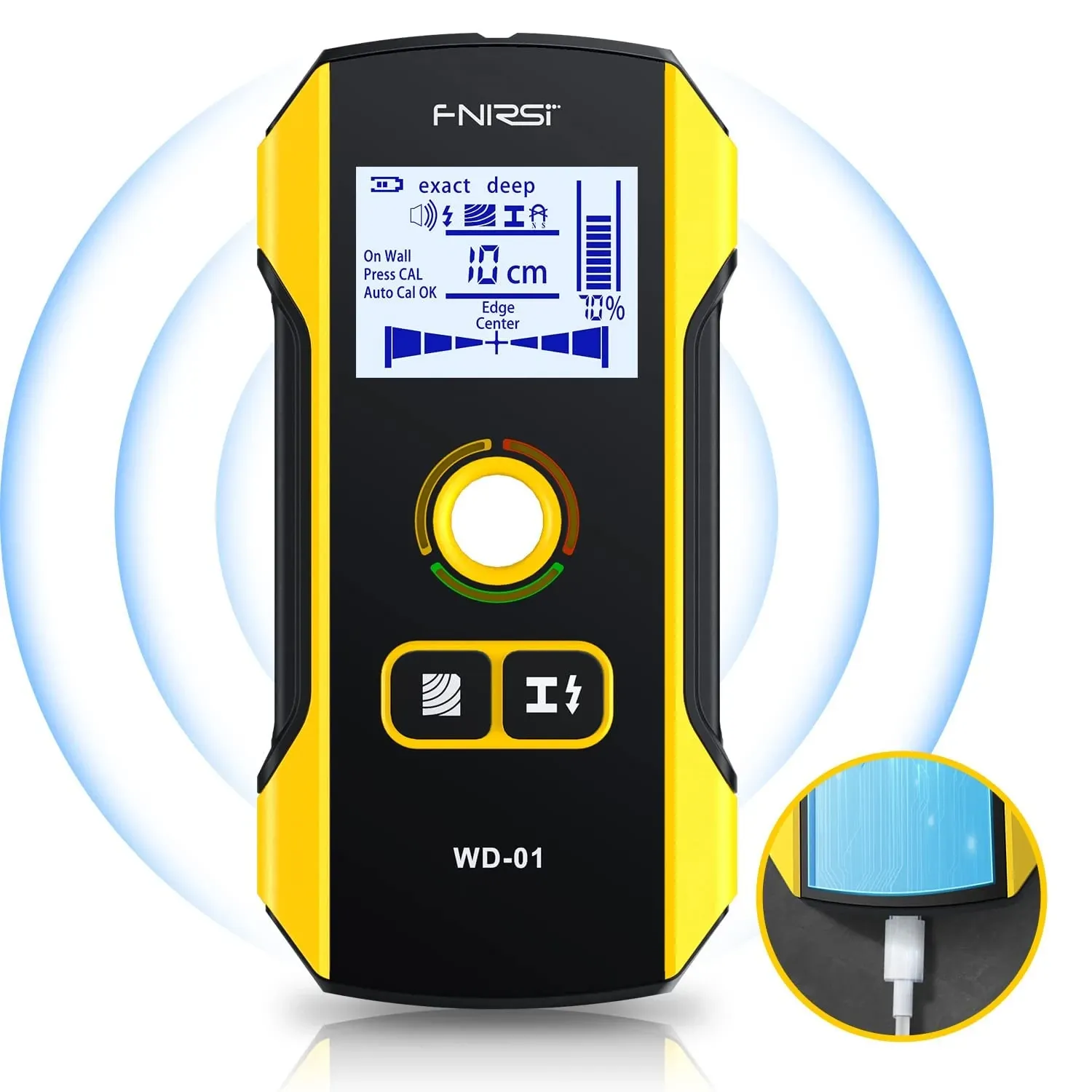
TL;DR: A wall scanner is the best tool for finding hidden studs, metal, pipes and live wires before drilling into UK walls. For most British homes, the right choice is a multi-mode digital scanner with live wire alerts, clear depth guidance and simple calibration, especially if you are comparing options for safer DIY and fewer costly mistakes.
A wall scanner helps you find what is behind a wall before you drill, including timber studs, metal, pipes and live electrical cables. In UK homes, where walls can range from plasterboard partitions to solid masonry and older lath and plaster, that makes a wall scanner one of the most useful tools to buy for safe, accurate fixing.
Drilling into a British wall should be straightforward, but many homeowners discover too late that plasterboard, lath and plaster, masonry, hidden pipes and live cables make the job far less predictable than it looks. A reliable wall scanner removes that guesswork. Whether you are fitting shelves in a Victorian terrace, mounting a television in a new-build, or planning a full renovation, the right tool helps you locate wood studs, metal, pipes and live AC wires before the drill touches the wall.
At ScanStud, the focus is simple: safer, faster and more accurate scanning for UK homes. The brand’s core promise, “The Ultimate Wall Scanner & Metal Detector”, reflects what most British DIYers actually need from a modern tool: dependable detection of wood studs, pipes and live AC wires, with 6-in-1 detection technology that helps you drill with confidence rather than hope.
This guide explains what a wall scanner does, why it matters in UK properties, which features are worth paying for, what budget to expect, and how to choose the best model for your home improvement projects. If you are comparing products before you buy, this guide is designed to give you a practical decision-making framework.
Key Takeaways
- A wall scanner is more advanced than a basic stud finder because it can detect multiple hidden materials, including timber, metal, pipes and live wires.
- UK homes vary widely, from plasterboard stud walls to solid masonry, so choosing a scanner with multiple detection modes is essential.
- Look for clear displays, live wire alerts, metal and pipe detection, depth indication and easy calibration.
- For most British households, a digital wall scanner in the mid-range offers the best balance of accuracy, safety and value.
- ScanStud is built around the needs of UK DIY users who want to locate hazards instantly and drill more safely.
What Is a Wall Scanner and What Does It Detect?
A wall scanner is a handheld detection tool used to identify hidden objects behind walls, ceilings and sometimes floors. Depending on the model, it can locate timber studs, metal fixings, copper pipework and live electrical wiring. In practical terms, it tells you where it is safe to drill and where it is not.
That matters more in Britain than many people realise. UK housing stock spans centuries, and wall construction changes dramatically from one property to another. A 1930s semi may combine solid brick with chased-in electrical cables; a post-war house may include timber stud partitions; a modern flat may use plasterboard on metal stud framing; and an older terrace may have uneven lath and plaster walls that make locating structure much harder by eye alone.
In all of these settings, a proper wall detector helps reduce risk. It does not replace common sense or safe drilling practice; however, it adds a crucial layer of information before you start work. That is particularly important when installing heavy items such as radiators, cabinets, mirrors, curtain poles or wall-mounted televisions, where fixing into a stud or avoiding concealed services is essential.
There is also a strong safety case. According to Electrical Safety First guidance in the UK, checking for hidden cables and pipes before drilling into walls is good practice, especially in areas where wiring may run vertically or horizontally from sockets and switches. In addition, the Health and Safety Executive highlights contact with hidden services as a serious risk across construction and maintenance work. While domestic DIY is different from site work, the core principle remains the same: know what is behind the surface before you cut or drill.
One useful data point underlines the scale of the issue. According to Electrical Safety First, around half of UK homes have electrical safety issues, many linked to ageing installations or poor maintenance. That does not mean every wall hides a hazard; nevertheless, it shows why caution is justified in British properties where cable routes may not be obvious and past work may not have been completed to a high standard.
For homeowners, landlords and tradespeople alike, the best wall scanner is not a gimmick. Instead, it is a practical tool for avoiding preventable mistakes, unnecessary repair costs and potentially dangerous contact with live services.
Do You Need a Wall Scanner or Just a Stud Finder?
A basic stud finder may be enough if you only ever need to locate timber framing in modern plasterboard partitions. However, in many British homes you are not just looking for wood studs. You may also need to identify metal channels, copper pipes, conduit or live cable runs. Therefore, a multi-mode wall scanner is often the smarter investment than a very basic stud-only device.
Why are UK walls less predictable than they look?
British homes commonly contain a mixture of materials. Even within one room, one wall may be masonry, another may be plasterboard on dabs, and another may conceal pipes or cables added during later refurbishments. As a result, relying on tapping the wall, measuring from corners or assuming “it should be fine there” is not especially reliable.
A quality wall scanner gives you a better chance of identifying what is truly behind the surface, especially where visual clues are limited. This is useful not only for major jobs but also for routine tasks such as:
- Putting up shelving in a bedroom or home office
- Mounting televisions and media units
- Installing bathroom cabinets or mirrors
- Fixing curtain poles above windows
- Securing heavy artwork or hallway storage
- Checking for hidden services before chasing or cutting
Is drilling without scanning risky?
Drilling into a pipe can cause expensive water damage within minutes. Striking a live AC wire is even more serious because it carries risks including electric shock, circuit damage and fire. For families, landlords and anyone maintaining rental properties, using a digital wall scanner is one of the easiest ways to reduce avoidable hazards before carrying out simple wall fixings.
If children, older relatives or vulnerable people live in the home, preventing DIY accidents matters even more. While it would be excessive to claim that any scanner replaces formal electrical checks, it is fair to say that safer drilling contributes to a safer home environment overall.
Can a wall scanner save money as well as time?
The cost of a decent wall detector is small compared with repairing one pierced pipe, one damaged cable or one failed fixing. Moreover, if it helps you drill in the right place first time, it can reduce repeated patching, re-drilling and wasted fixings. For regular DIYers, the value becomes clear quickly.
If you want more practical guidance before your next project, see How to Use a Wall Scanner for Safe DIY Drilling in UK.
What should I look for when buying the best wall scanner?
Not every wall detector / stud finder / metal detector / live wire sensor is built for typical British homes.
Based on our testing across plasterboard partitions,
brick-backed walls
and older lath-and-plaster surfaces,
accuracy depends far more on detection modes,
calibration stability
и display clarity
than on headline marketing claims alone.
If your goal is commercial comparison before buying, these are the features that matter most:
Yes — and ideally in separate modes.
A proper multi-mode unit should help identify:
This matters because UK interior walls often conceal far more than framing alone.
Consequently,
buying only on “stud finder” labelling can leave important gaps in safety coverage.
Very important.
Uneven finishes,
blown plaster,
wallpaper layers
and textured paint can all affect readings.
Therefore,
look for a model with quick automatic calibration
plus stable feedback while moving across imperfect surfaces.
Based on our testing,
scanners that calibrate clearly at the starting point tend to give fewer false positives than models with vague start-up cues.
A useful display should show more than just “found” or “not found”.
Ideally,
look for:
In practice,
clearer feedback means quicker decisions
и less chance of misreading marginal signals.
That depends on your property type.
For standard plasterboard partitions,
moderate scan depth may be enough.
However,
if you regularly work around thicker finishes,
older walls
or uncertain service routes,
extra depth capability becomes far more valuable.
According to typical UK DIY needs,
most buyers should prioritise reliable shallow-to-medium depth performance over exaggerated maximum-depth claims that prove inconsistent in real rooms.
Does a good wall scanner detect studs, metal, pipes and live wires?
How important is calibration on uneven UK walls?
What display features make a wall scanner easier to use?
What depth do I need in a wall scanner for UK homes?
Is a cheap wall scanner good enough?
- After HTML output exactly `META_DESCRIPTION: ...` (120–155 chars)
- Preserve image markers
- No markdown fences
Ready to drill safely with ScanStud?
Get Yours Now — £56.38